

You’re Not Learning Drums. You’re Learning to Watch.
Drum cover videos are everywhere, and they’re producing a generation of players who can copy anything and create nothing.

SMITHSON ARTS
The Ten Lies We Tell About Learning Music · Lie #2
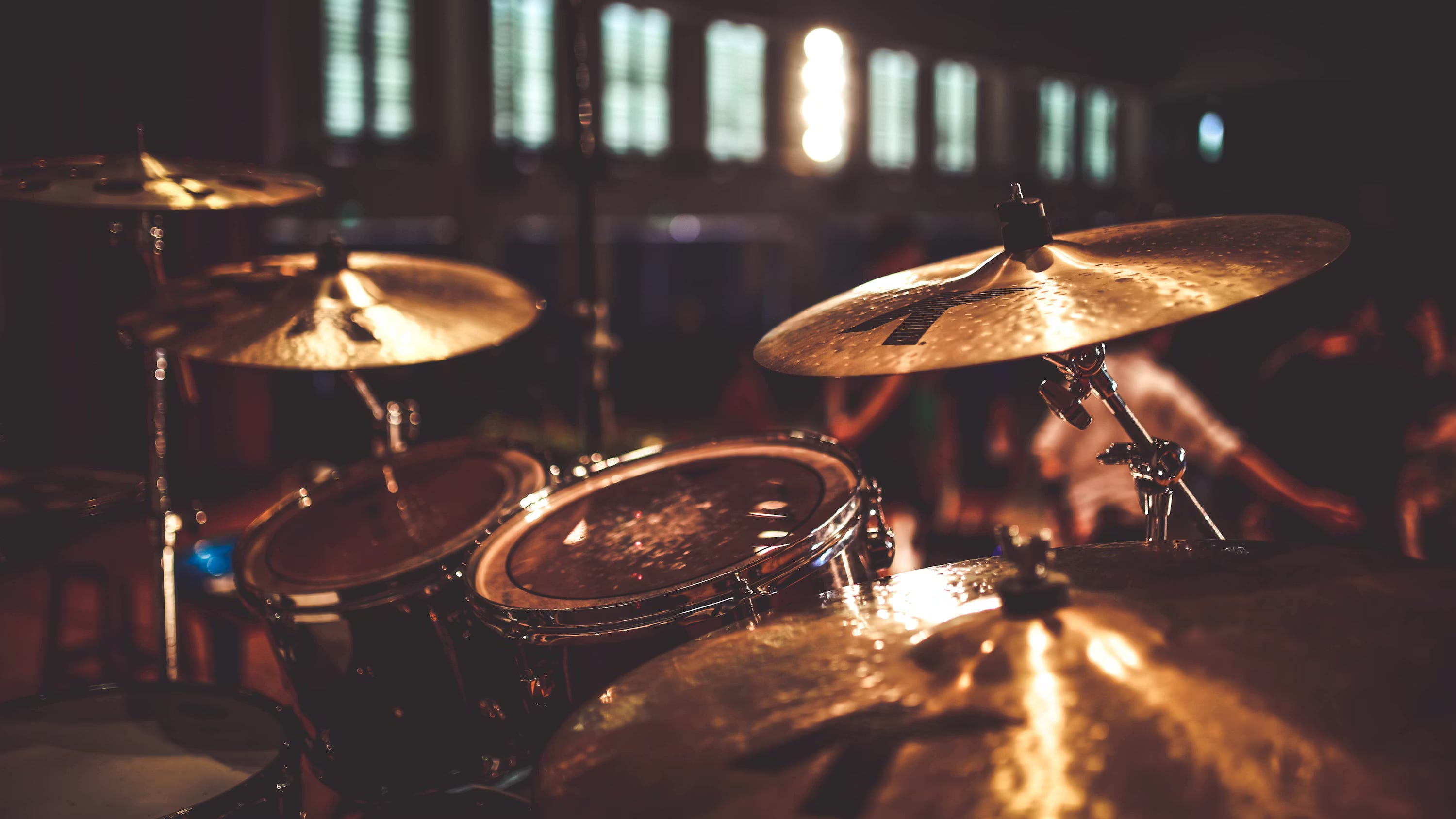
You probably already know that YouTube has produced an extraordinary generation of musicians who can replicate almost anything they see, beat for beat, note for note. Players of all ages show skills that are not only impressive but also display incredible memory. It appears to be mastery of the instrument, and it is a great show to watch.
But is this learning music? Is this how we develop identity? Many complaints about current musical trends refer to the lack of originality; a static culture that gives us homogenized sounds that don’t last in our collective memory for more than a few months. I believe this is a result, partially, of the music cover trend on YouTube and other social media platforms.
(A quick caveat:
Drums are my main instrument, so I am going to focus on drums. But be aware that this goes for any instrument.)
Ok, so this is not a criticism of drum covers. They’re impressive, and they’re entertaining. Done well, they represent real technical achievement and should be applauded. The problem isn’t the videos; the problem is what happens when a learner mistakes watching for learning, and the eyes replace the ears.
Watching teaches you to copy. Listening teaches you to play. Those are fundamentally different cognitive activities, and confusing them is costing learners their musical identity.
The Science of How Musical Ability Actually Develops
To understand why this matters, you need to understand a concept that most music educators know well: audiation.
Edwin Gordon, whose research on music learning spanned more than four decades, coined the term in 1975 to describe something deceptively simple: the ability to hear and give meaning to music when the sound is not physically present. He described it this way, “Audiation is to music what thought is to language”. (Gordon, 2012)
This is not a metaphor. Gordon meant it structurally because just as fluent language comprehension requires you to hear a sentence and instantly generate meaning (not decode it word by word), fluent musical comprehension requires you to hear a rhythm or a phrase and instantly understand it in context. Not just copy it or recognize it, but understand it.
Gordon spent 40 years studying what happened when music education emphasized imitation and recognition at the expense of audiation. His conclusion was stark: students who learned primarily through imitation were unable to create, improvise, or develop genuine musical independence. They could reproduce what they had seen or heard, but they could not generate what they had never seen before. (Gordon, 1989)
Now apply that directly to the drum covers. When a player watches a cover video and replicates it, they are engaged in imitation, the lowest rung of Gordon’s learning ladder. The drummer in the video has already made every creative decision: the feel, the fill choices, the dynamics, etc. The learner then simply reproduces those decisions. The learner’s brain is not being asked to make a single musical judgment; it is being asked to execute a series of pre-solved motor problems.
Don’t get me wrong, this can be a valuable skill. It is just not the skill most learners think they are developing.
What Your Brain Is Actually Doing When You Watch vs. When You Listen
Research published in Scientific Reports found that musical learning is fundamentally built on what scientists call audio-visuomotor associations — the brain’s ability to link what it hears, what it sees, and what it physically does into a unified sensorimotor system. Experienced musicians develop these associations across all three channels simultaneously. (Luciani, M. G., Cortelazzo, A., & Proverbio, A. M. 2022).
But here is the key insight: when a learner watches a drum cover, the visual channel dominates, and the auditory channel becomes secondary. The learner is training their eyes to cue their hands. But when they sit down to play without the video (without the visual scaffold), the cuing system they trained is gone. What remains is only what they genuinely internalized through hearing.
A second study, also published in Scientific Reports, examined novice drummers specifically. It found that beginners’ ability to produce accurate drumming sequences was significantly enhanced by external auditory cues, and that this reliance on external stimuli was a substitute for something the novices had not yet built: a stable internal model of the music. (Schiavio et al., 2021).
The cover video isn’t teaching the learner to play. It’s lending the learner a musical brain for the duration of the video and taking it back when the screen goes dark.
The Imagination Gap and Why It Matters for Originality
Here is where my argument moves from technical to musical.
When a learner sits down with only a recording — no video, no notation, no visual reference — and tries to reproduce what they heard, something different happens in the brain. Research on musical imagery confirms that this process activates what Gordon called audiation: the mental reconstruction of music from memory and feel, drawing on the brain’s auditory imagery systems to generate an internal representation of the music before the hands play a single note. (Meng & Luck 2024)
That reconstruction is never perfect. Memory is imperfect, hearing is subjective, and the learner will mishear a fill, playing something slightly different. They will interpret a groove feel through the filter of everything they have already internalized musically. The gap between what they heard and what they played is not a failure. It is the first evidence of a musical voice. This is the beginning of personal style.
Originality in music is not invented from nothing. It develops in this space: between the absorbed influence and the imperfect reproduction. Every drummer you admire developed their voice in that gap. They listened obsessively, they played imperfectly, and over thousands of repetitions, those imperfections became consistent and then became identity.
Research in the British Journal of Music Education (Cambridge, 2017) confirmed this mechanism in a study of undergraduate musicians learning by ear from recordings. The study found that playing by ear from audio, without visual scaffolding, served as a direct pathway to improvisation and group creativity, precisely because it required learners to construct the music before they could play it internally. (Varvarigou 2017)
What This Means for Band Directors
If you direct a band program, you are likely already familiar with the student who can play anything as long as someone shows them first. They learn new material quickly. They sight-read adequately. But ask them to improvise, to fill a bar in a way that makes musical sense, to listen to the ensemble and adjust, and they stall.
This is not a talent deficit. It is an audiation deficit. These students have been trained to respond to visual and notational cues. They have not been trained to generate musical ideas internally. And the drum cover habit (which many of your drummers bring from home) is reinforcing exactly this pattern.
The fix is not to ban cover videos, but to add an audiation layer before the imitation layer. Require students to listen to a passage without watching, describe what they hear, predict what comes next, and only then attempt to play it. This sequence — hear, predict, play — is the cognitive engine that builds genuine musicianship.
A 2025 study in the Journal of Transformative Education on 21st-century approaches to ear training confirmed that structured aural skills activities, particularly those involving listening before performing, produced measurably stronger musical understanding than imitation-first approaches. (İlkay et al., 2025).
What This Means for Intermediate Players Who’ve Plateaued
If you’ve been playing for a few years and feel stuck, technically capable but musically flat, this is worth sitting with. The plateau most intermediate players hit is not a technique problem. It is a listening problem.
You may have spent years absorbing music through your eyes, and your muscle memory is wired to execute patterns you have seen demonstrated, the old “monkey see, monkey do” issue. What you have not built is a library of musical decisions you made yourself: grooves you found, fills you constructed from feel, rhythmic ideas you pulled out of the air because you heard something in a song and tried to answer it with your body on the drums.
The way out is deliberate and unglamorous: turn off the screen. Put on the song. Listen. Then play.
Not playing along, that just returns you to the cued-response mode. Listen. Then stop the music. Then play what you heard, entirely from memory and imagination. Get it wrong. Try again. Let the wrongness inform you about what you actually heard and what you assumed. Over time, this is the practice that builds genuine musical intelligence.
The drummer you’re trying to sound like didn’t learn by watching someone else. They learned by listening and then trusting what they heard.
The Listen-Then-Play Method: A Practical Exercise
Here is a structured version of the method you can implement, whether you are a student, a private teacher, or a band director working with your percussion section.
Step 1: Select the track. Choose a song you want to learn. Any genre, any difficulty level. Do not look for a cover video or a tutorial. Just find the original recording.
Step 2: Listen actively three times. First listen: hear the whole song. Pay attention to feel, not detail. Second listen: focus only on the drums. What is the overall groove pattern? Where are the fills? Third listen: focus on one specific section — verse, chorus, or bridge — and try to mentally “sing” the drum part.
Step 3: Stop the music. Do not play along. Turn it off. Sit at your kit in silence.
Step 4: Play what you remember. Reproduce what you heard from memory. You will be imperfect. That is the point. Play the whole section through without stopping to correct yourself.
Step 5: Listen again, then compare. Play the original again. Note the differences between what you heard and what you played. These differences are not failures; they are diagnostic data about your musical ear. They are also the raw material of your developing voice.
Step 6: Repeat, not review. Do not look up a tutorial to “get it right.” Do the listen-play cycle three to five times. Each iteration will move you closer to the original, and each iteration will also preserve some of your own interpretation. That is healthy. That is how voices develop.
Not only will this add to your vocabulary as a drummer and musician, but it will also increase your ability to concentrate and focus. (A topic I will come back to later in another post.)
A Note on the Drummers Who Proved This
If these points I am making seem spurious, go look into the background of some of your favorite drummers and research their early background. You will find that many only listened to other drummers and had to suss out the aspects of their style with only their ears.
These are not arguments from authority. They are data points that suggest a pattern: the drummers whose voices we still hear decades later did not develop those voices by watching. They developed them by listening so hard that the music became internal, and then playing from that internal place.
The Myth, Simply Stated
“Watching drum covers teaches you to play drums.”
The truth: it teaches you to copy drums. The gap between those two things is your entire musical identity.
Cover videos are fun. Watch them for enjoyment, for inspiration, for reference. But if you are using them as your primary method of learning — if the screen is your teacher — you are taking someone else’s musical decisions and calling it practice.
The music you cannot yet play is waiting for you in your own ears. Turn off the screen and go find it.
Sources & Further Reading
Andrianopoulou, M. (2019). Aural education: Reconceptualizing ear training in higher music learning (1st ed.). Routledge. https://doi.org/10.4324/9780429289767
Gordon, E. E. (1989). Audiation, music learning theory, music aptitude, and creativity. Suncoast Music Education Forum on Creativity. (ERIC Document Reproduction Service No. ED380341)
Gordon, E. E. (2012). Learning sequences in music: A contemporary music learning theory (2012 ed.). GIA Publications.
Green, L. (2014). Hear, listen, play! How to free your students’ aural, improvisation and performance skills. Oxford University Press.
İlkay, G., Kıvanç Öztuğ, E., Eren, H. C., & Sülün, E. (2025). Transformative 21st century approaches in musical ear training: Fostering essential skills for enhanced learning. Sage Open, 15(2), Article 21582440251326438. https://doi.org/10.1177/21582440251326438
Karpinski, G. S. (2000). Aural skills acquisition: The development of listening, reading, and performing skills in college-level musicians. Oxford University Press.
Luciani, M. G., Cortelazzo, A., & Proverbio, A. M. (2022). The role of auditory feedback in the motor learning of music in experienced and novice performers. Scientific Reports, 12(1), Article 19822. https://doi.org/10.1038/s41598-022-24262-x
Meng, C., & Luck, G. (2024). Voluntary musical imagery in music practice: Contextual meaning, neuroscientific mechanisms and practical applications. Frontiers in Psychology, 15, Article 1452179. https://doi.org/10.3389/fpsyg.2024.1452179
Schiavio, A., Stupacher, J., Xypolitaki, E., Parncutt, R., & Timmers, R. (2021). Musical novices perform with equal accuracy when learning to drum alone or with a peer. Scientific Reports, 11(1), Article 12422. https://doi.org/10.1038/s41598-021-91820-0
Varvarigou, M. (2017). Group playing by ear in higher education: The processes that support imitation, invention and group improvisation. British Journal of Music Education, 34(3), 291–304. https://doi.org/10.1017/S0265051717000109
About Smithson Arts
Smithson Arts is an online music school built on one premise: any person with desire and time can learn to play. No talent required. If you’re a student, band director, or parent looking to bring this approach to your students, kids, or even yourself, reply directly to this Substack — I’d like to talk.
If this piece meant something to you, share it with one person who needs to hear it.
Smithson Arts · smithsonarts.com · © 2026